From surgery day to game day.
ACL Strong: Recovery Tracker takes you through seven recovery phases, each with clear criteria to move on. Log every session, measure what your physio measures, and watch the gap between your legs close.

Seven phases. You move on when your knee is ready.
Recovery doesn’t run on a calendar. Each phase has a short list of things your knee needs to do before the next one opens, and the home screen shows exactly how close you are.
-
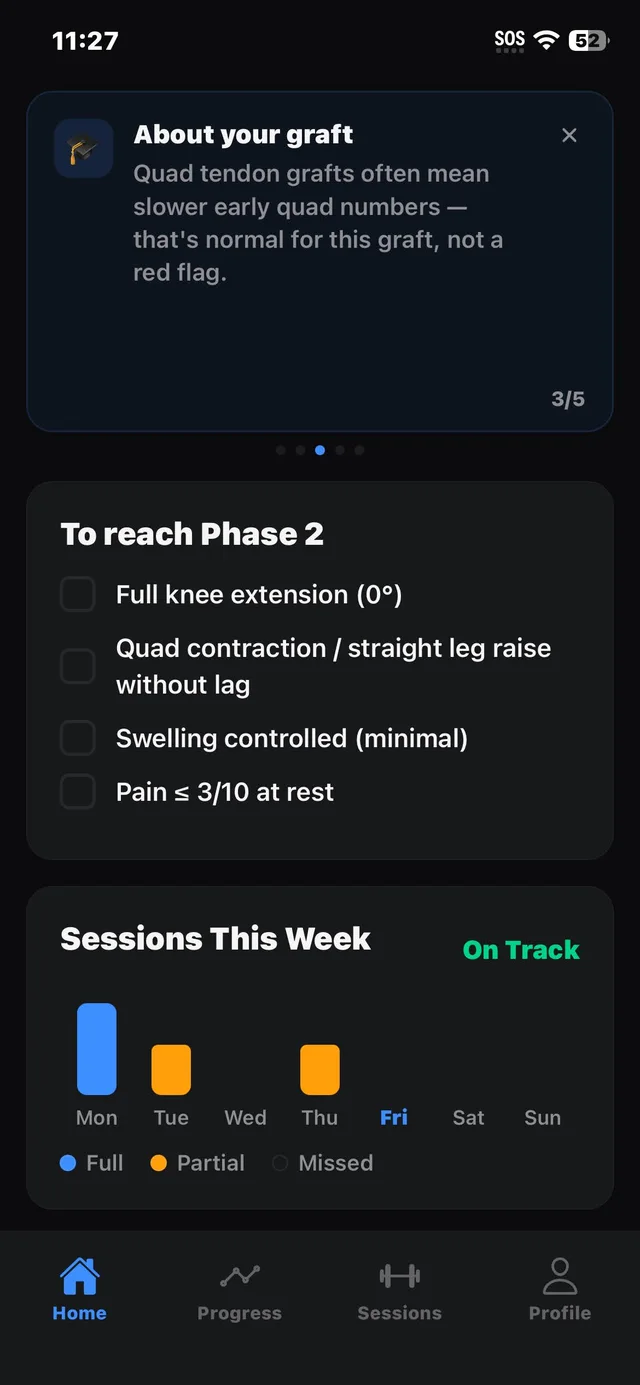
Protect & Settle
The first weeks after surgery. Calm the swelling, get your quad firing again and get the knee fully straight.
To reach Phase 2
- Full knee extension (0°)
- Straight leg raise without a lag
- Swelling under control
- Pain at 3/10 or less at rest
-
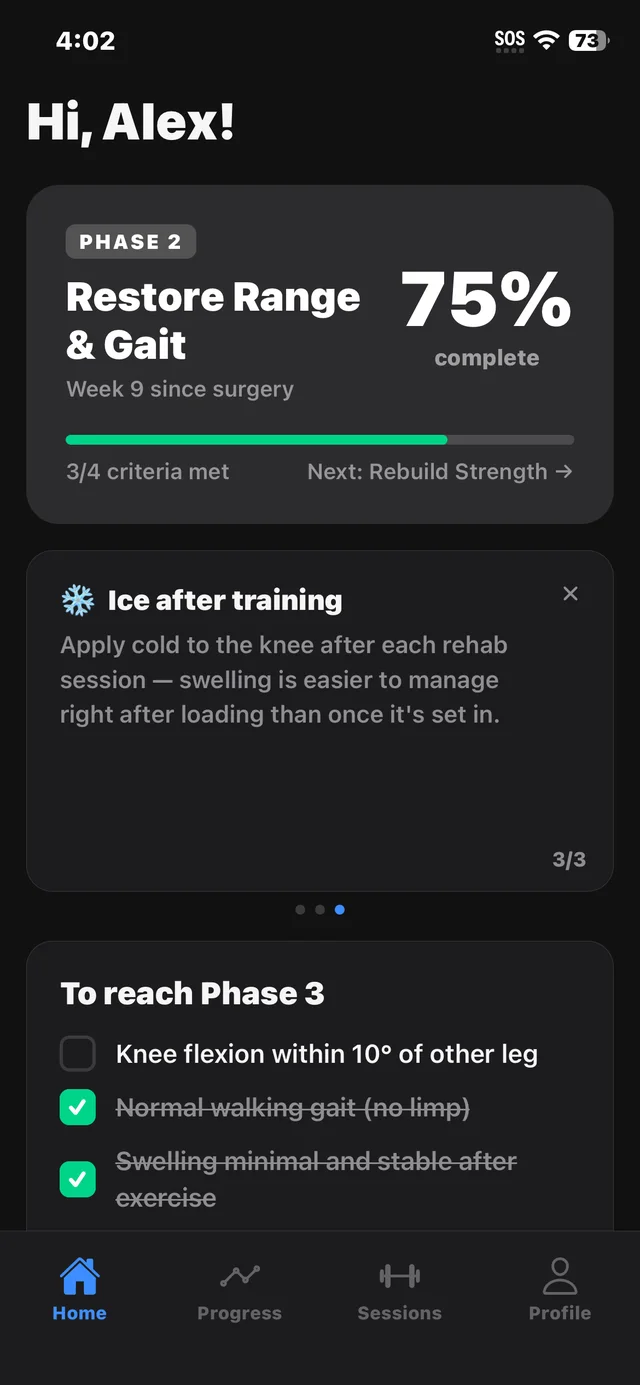
Restore Range & Gait
The bend comes back and the crutches go away. The goal is walking without a limp.
To reach Phase 3
- Knee flexion within 10° of your other leg
- Normal walking gait, no limp
- Swelling minimal and stable after exercise
-
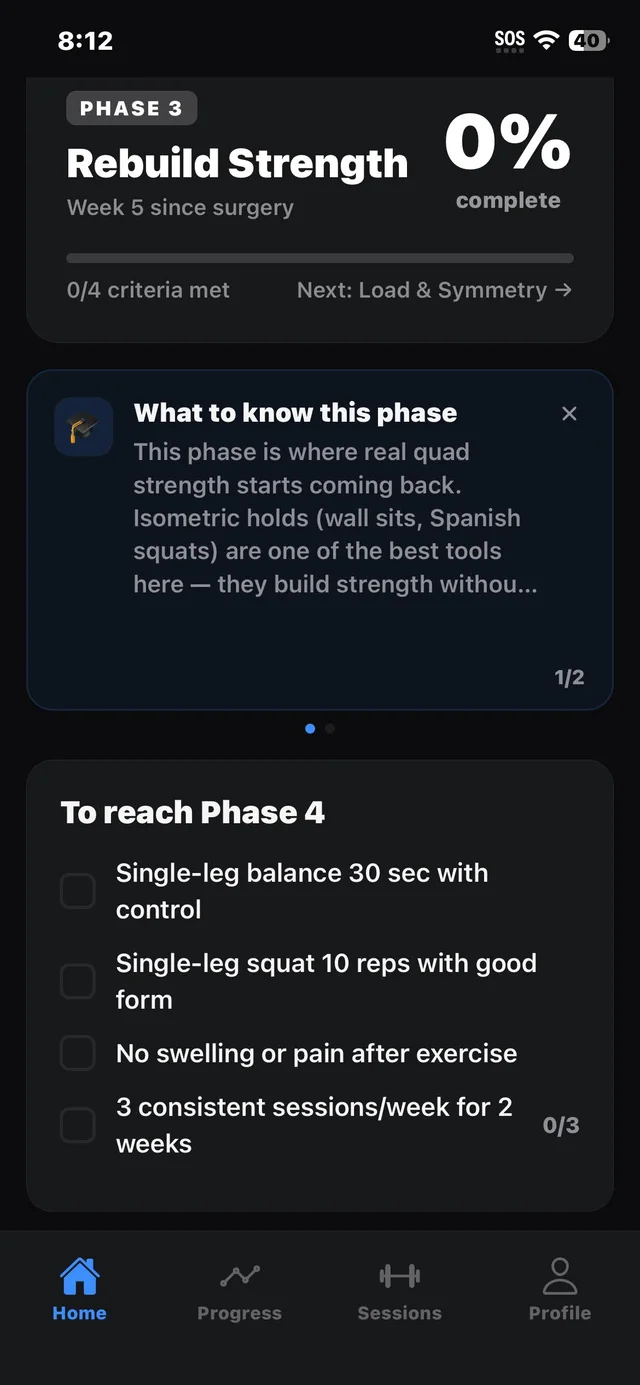
Rebuild Strength
This is where real quad strength starts coming back. Wall sits, Spanish squats and isometric holds do the heavy lifting.
To reach Phase 4
- Single-leg balance for 30 seconds with control
- 10 single-leg squats with good form
- No swelling or pain after exercise
- 3 sessions a week for 2 weeks
-
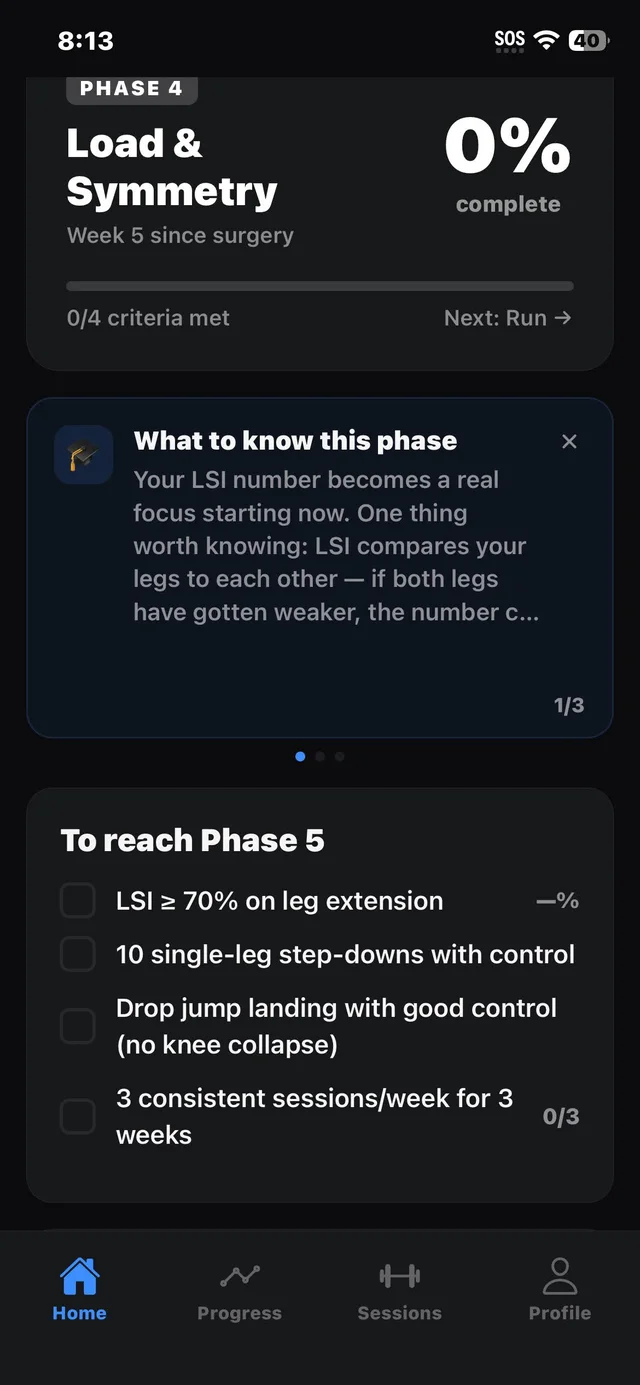
Load & Symmetry
Your Leg Symmetry Index becomes the number to watch. Getting stronger isn’t enough now. Your legs need to get even.
To reach Phase 5
- LSI of 70% or more on leg extension
- 10 single-leg step-downs with control
- Drop jump landing with no knee collapse
- 3 sessions a week for 3 weeks
-
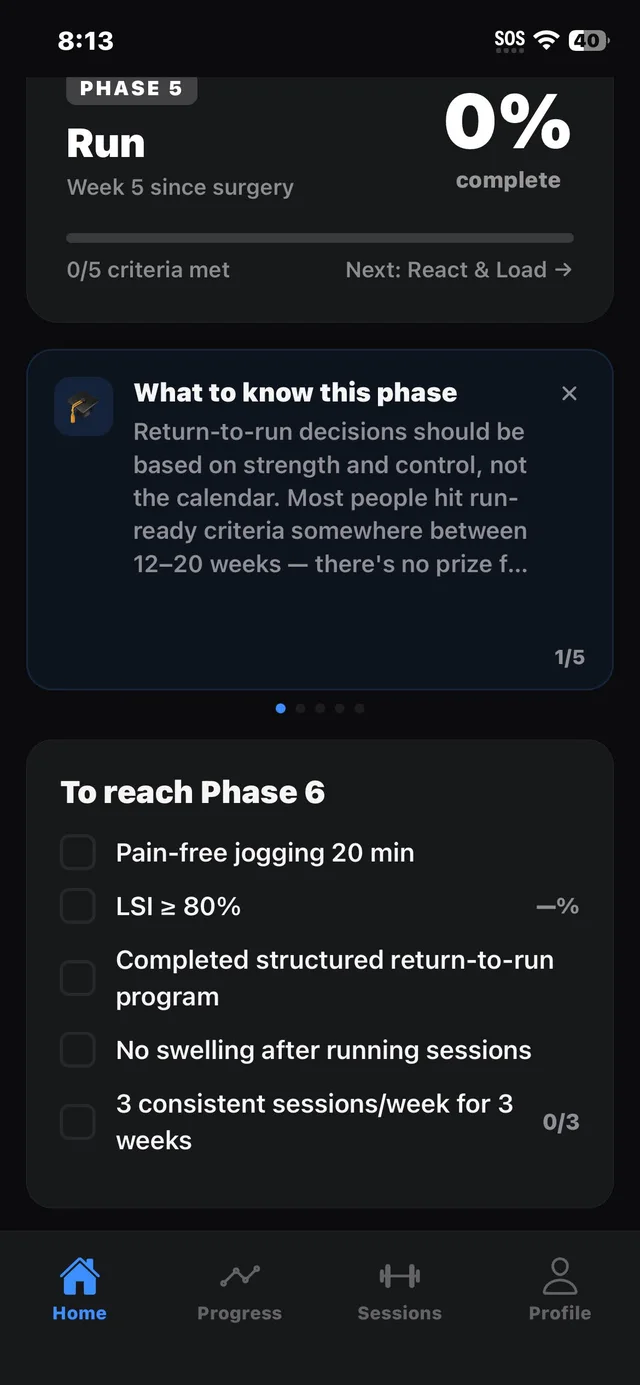
Run
When you return to running depends on strength and control, not how many weeks it’s been.
To reach Phase 6
- 20 minutes of pain-free jogging
- LSI of 80% or more
- A structured return-to-run program completed
- No swelling after running sessions
-
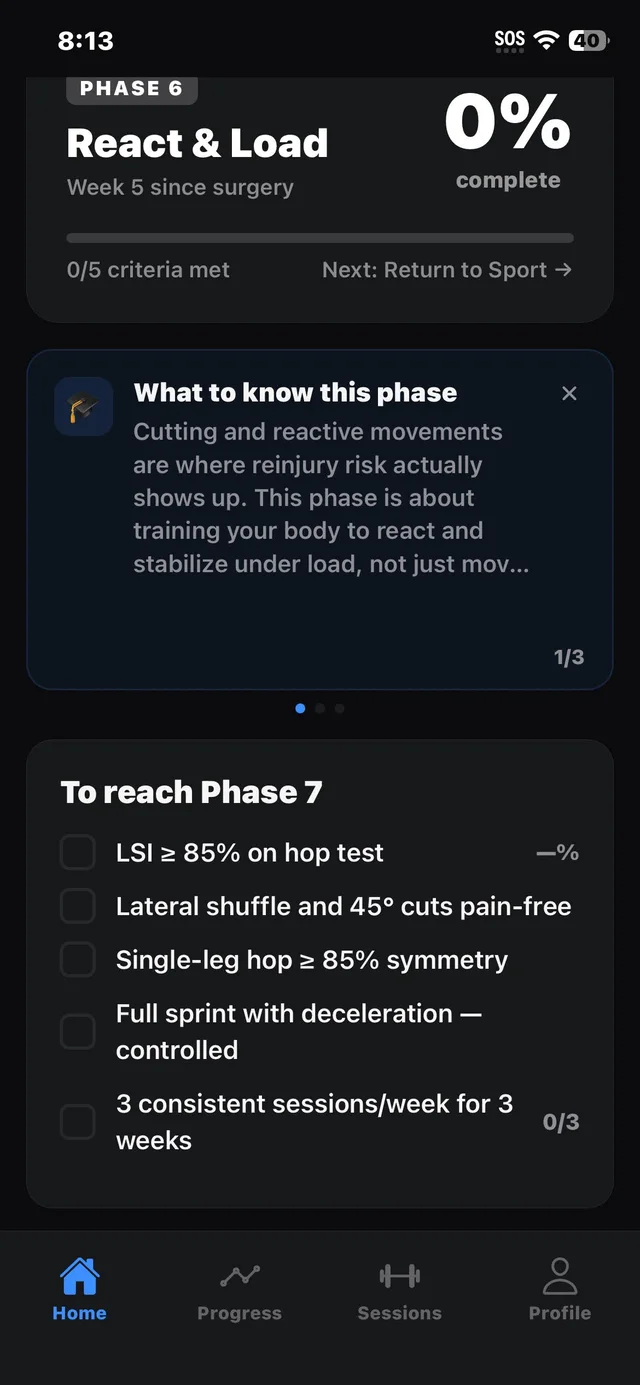
React & Load
Cutting, landing and changing direction, which is where reinjury risk actually shows up. You train your knee to react, not just move.
To reach Phase 7
- LSI of 85% or more on the hop test
- Lateral shuffles and 45° cuts without pain
- Single-leg hop at 85% symmetry or more
- Full sprint with controlled deceleration
-
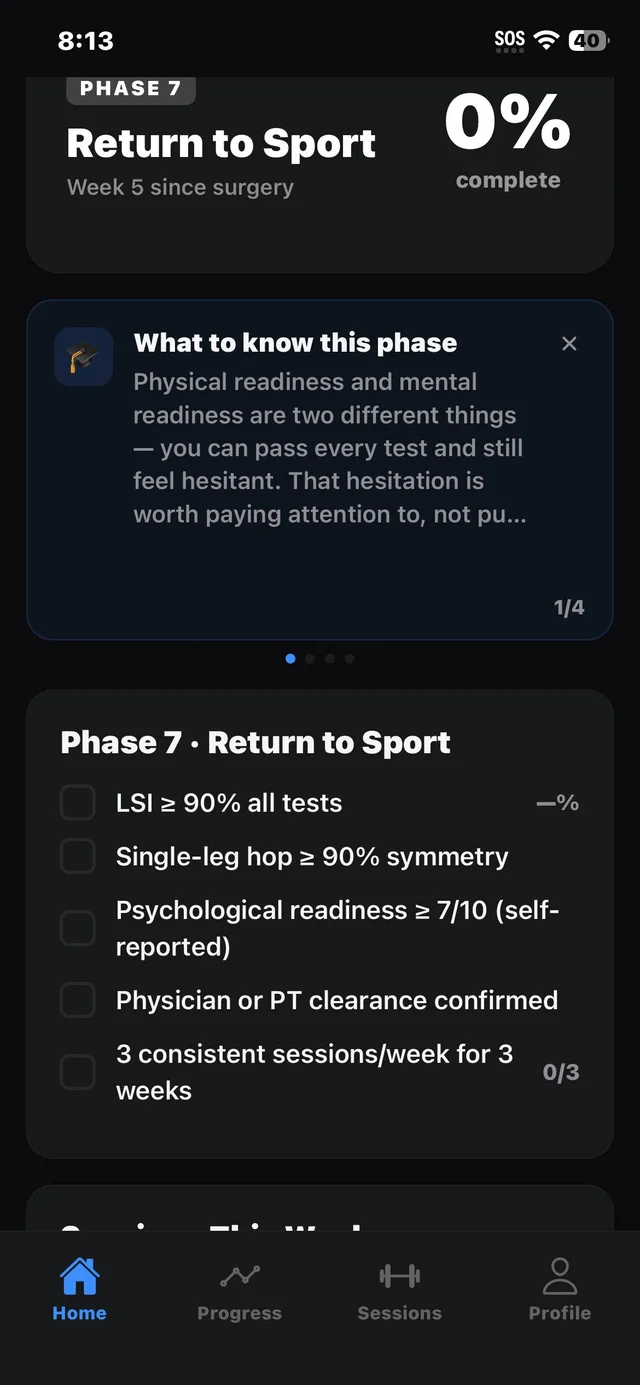
Return to Sport
Being physically ready and feeling ready aren’t the same thing. You can pass every test and still feel hesitant, so ACL Strong tracks both.
Ready to play
- LSI of 90% or more on all tests
- Single-leg hop at 90% symmetry or more
- Psychological readiness of 7/10 or more
- Clearance from your surgeon or physio
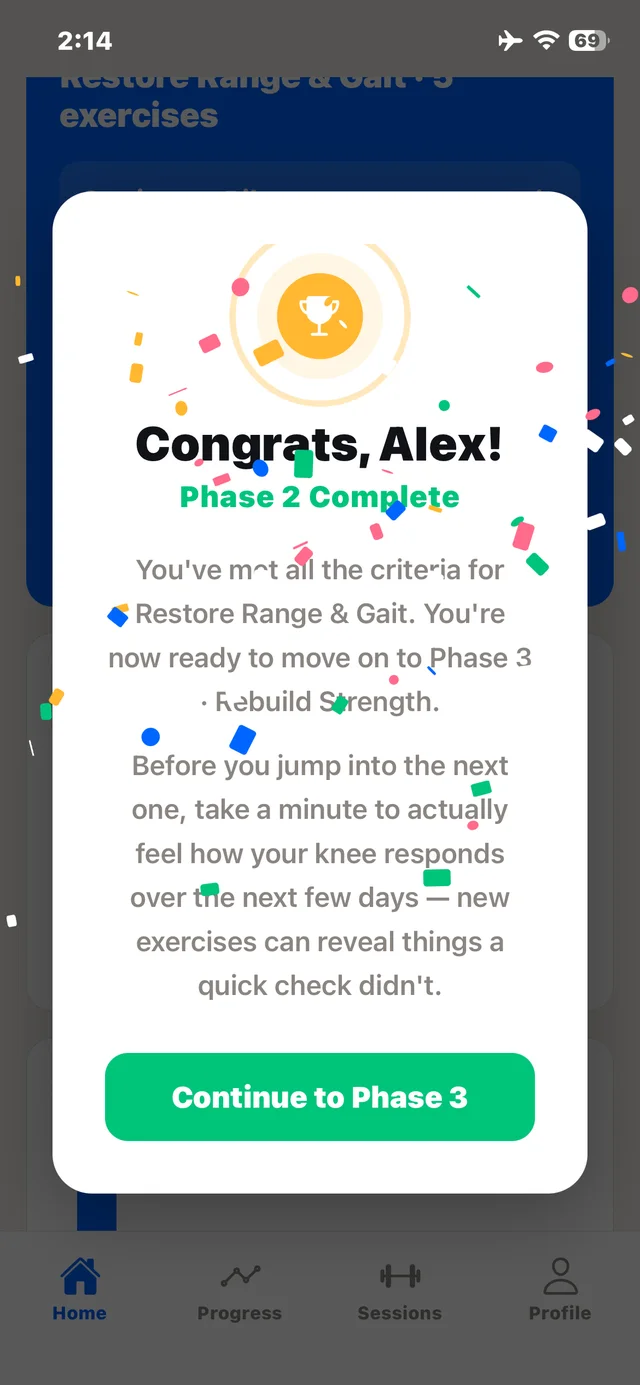
Every phase you finish gets its moment.
When you tick off the last criterion, ACL Strong moves you up and swaps in routines for the next phase. Tell it how far along you are when you set it up, and it starts you in the right place.
Everything your rehab produces, in one place.
-
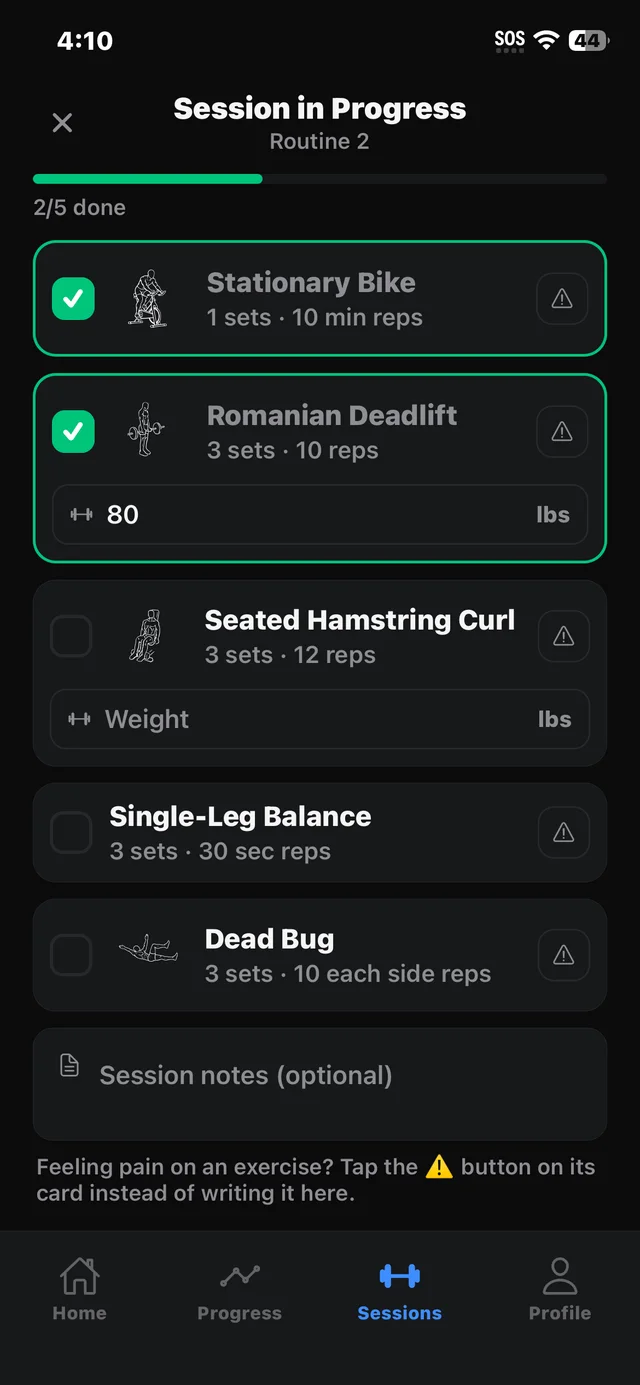
Log a session in seconds
Tick off each exercise, enter the weight, and tap the warning button on any exercise that hurts.
-
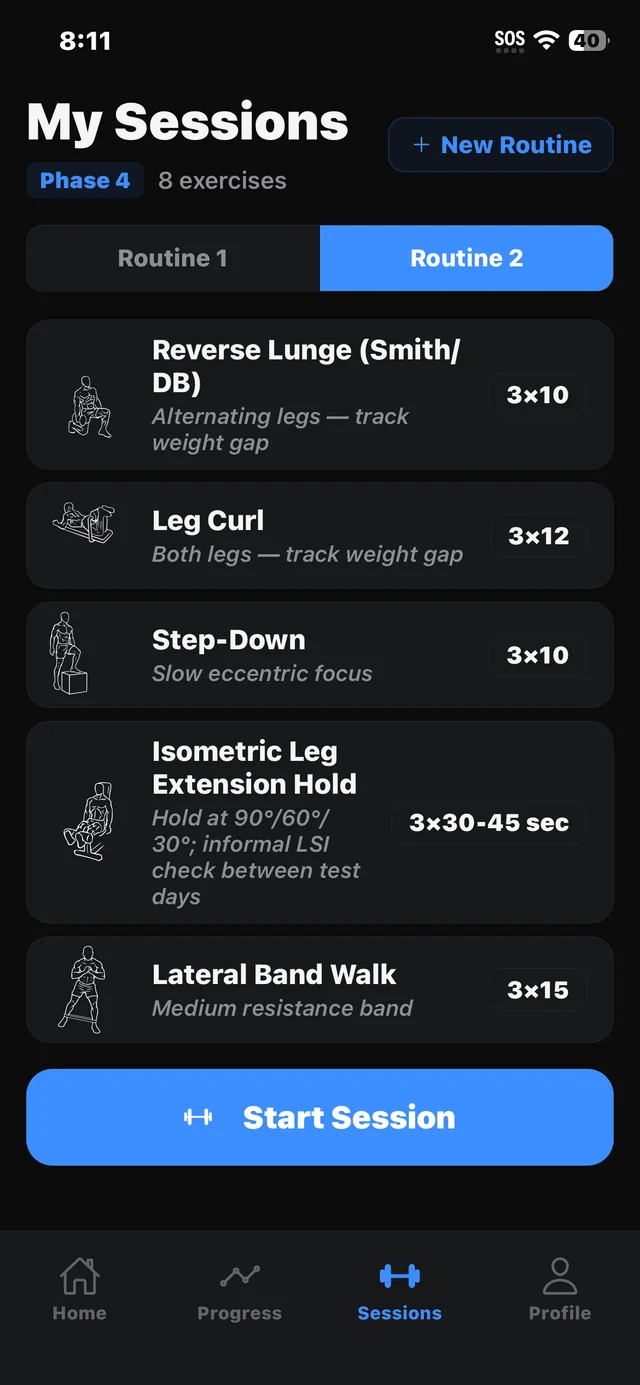
Routines built for your phase
Each phase comes with two routines of exercises suited to that stage. Swap exercises or build your own to match your physio’s plan.
-
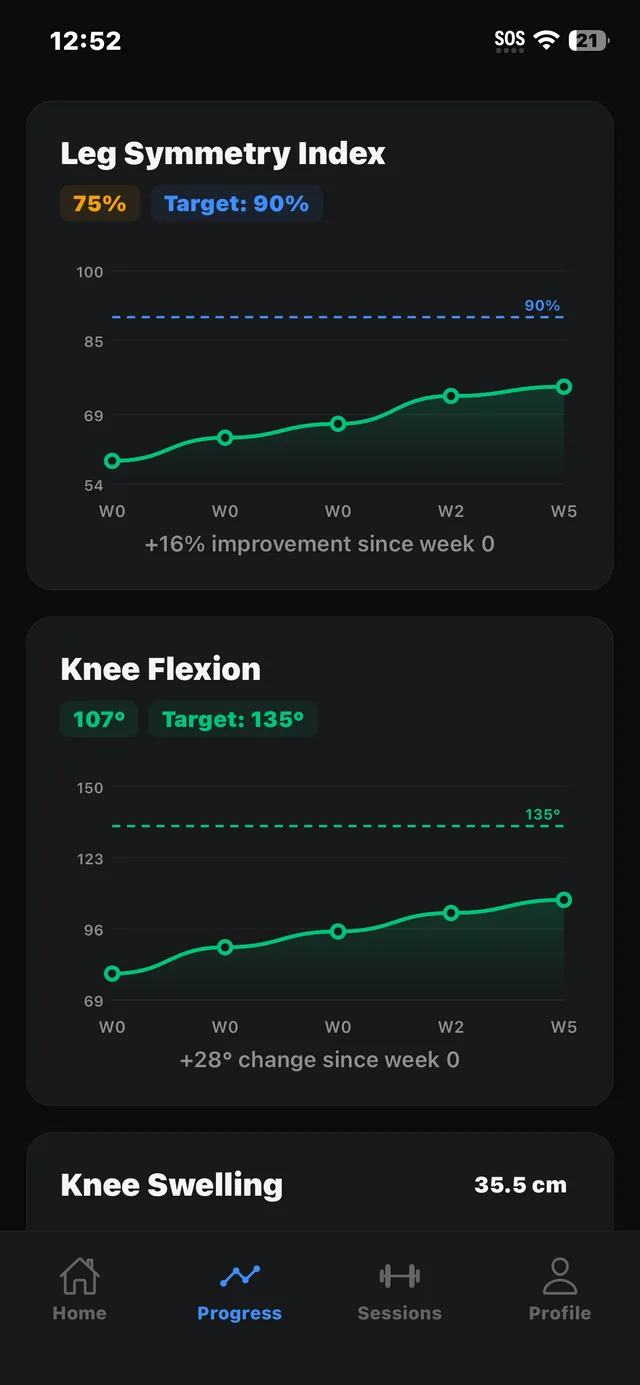
See your numbers move
Leg Symmetry Index, knee flexion and swelling are charted week by week against the targets you’re working toward.
-
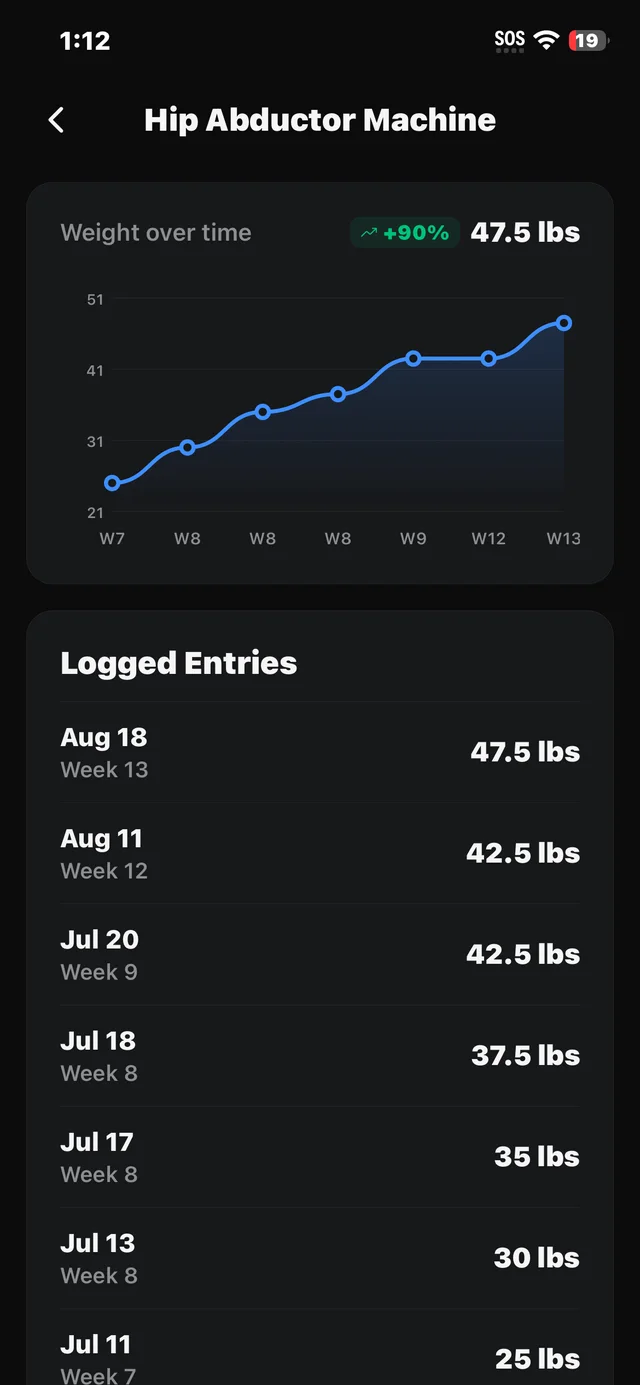
Watch your strength come back
Every weight you log builds a history for that exercise, so a slow week doesn’t hide two months of progress.
-
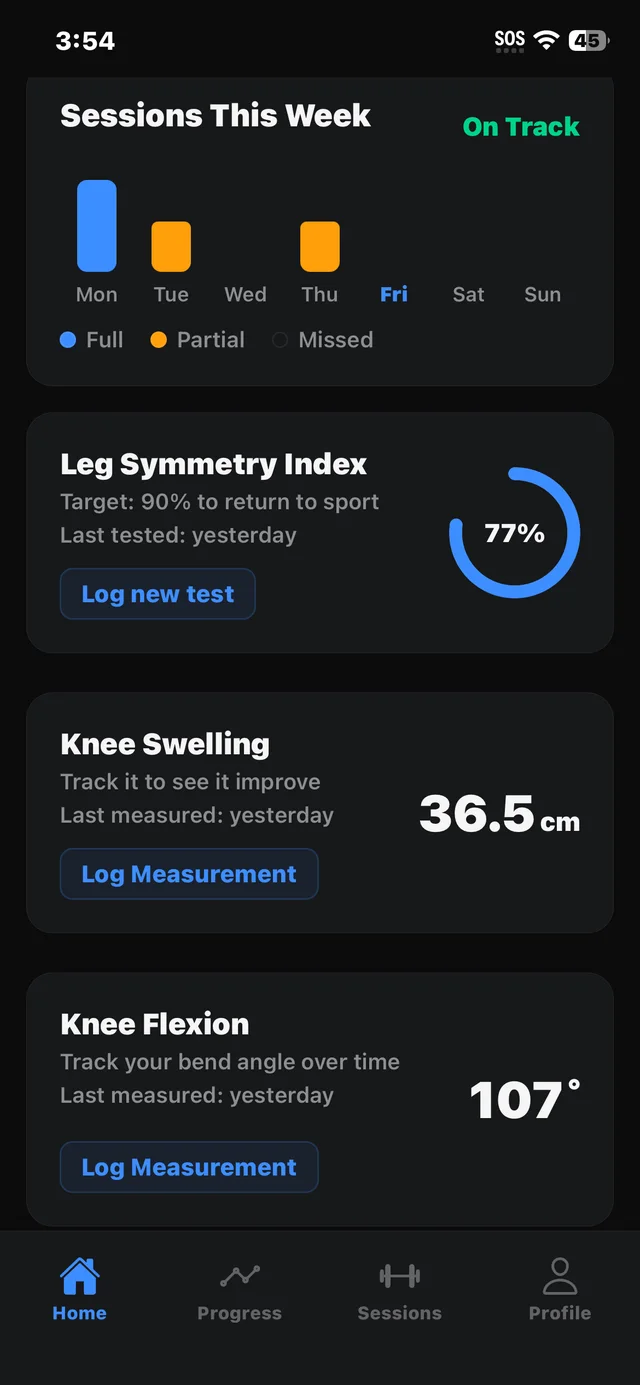
Your week at a glance
See which sessions you finished this week, your latest LSI, and today’s swelling and flexion measurements.
-
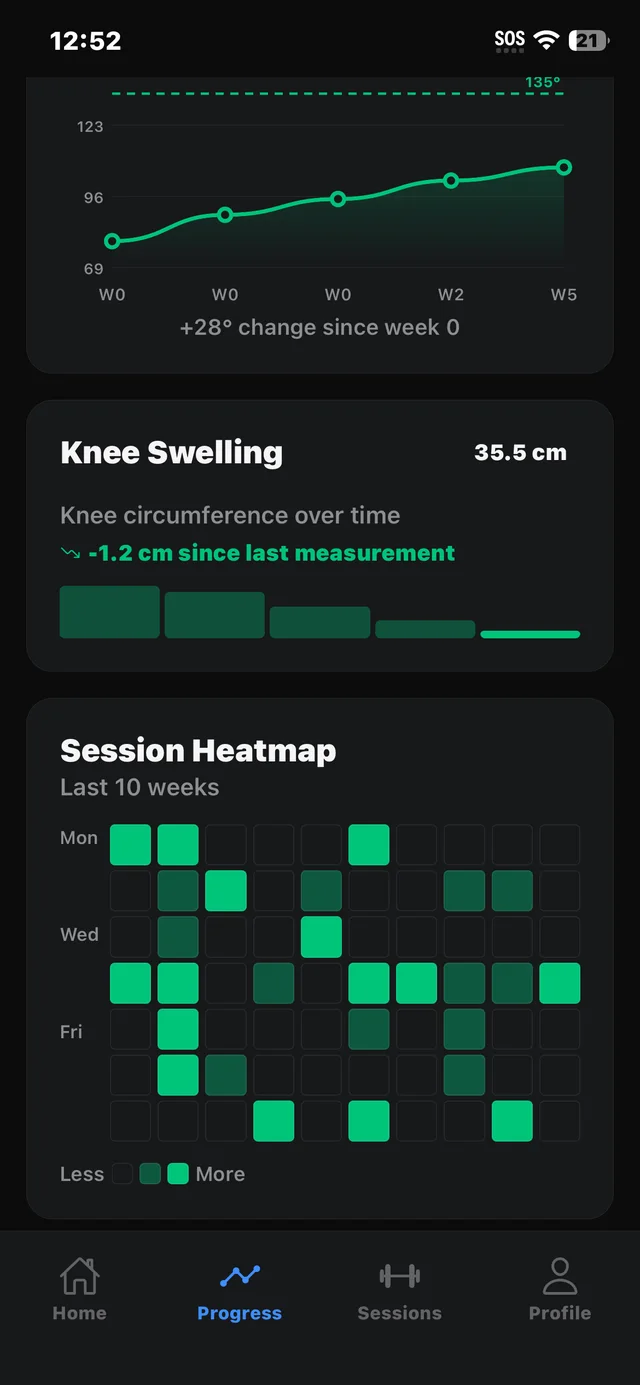
Consistency you can see
A ten-week heatmap shows how regularly you’ve trained. It’s easy to keep going when you can see the run you’re on.
-
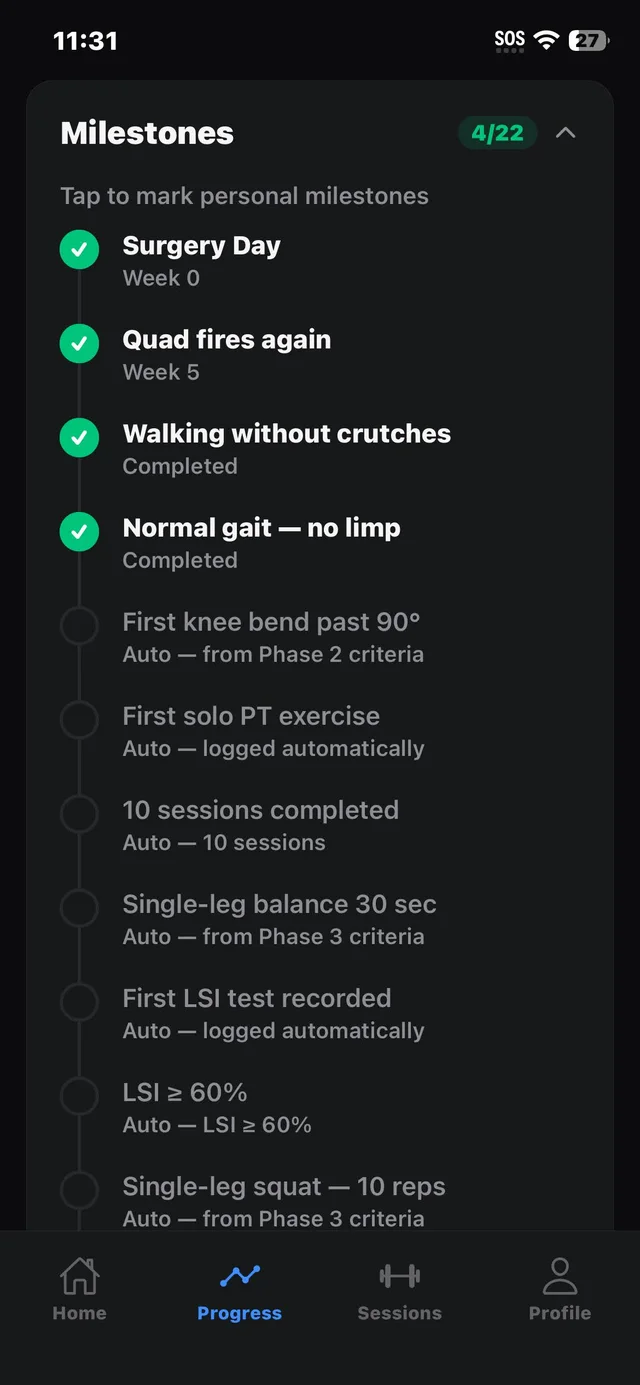
Milestones worth marking
The quad firing again, the first steps without crutches, the first 90° bend. Small wins get logged too.
The number that decides when you’re back.
Your Leg Symmetry Index (LSI) shows how your operated leg compares with your other one, as a percentage. Do the same test on each leg, divide the operated leg’s result by the other leg’s, and that’s your LSI. Most return-to-sport criteria want to see 90% or more.
A common way to measure it is the single-leg hop: hop as far as you can on one leg, then on the other. Try it with your own distances. ACL Strong saves every test you log and shows how your LSI changes over time.
Questions
Does it replace my physio?
No. ACL Strong keeps track of your rehab and gives you a clear picture of where you are. Your surgeon and physio still make the decisions. The criteria in the app are the kinds of markers they use, so bring your numbers to your next appointment.
I’m already months past surgery. Is it too late to start?
Not at all. When you set it up, tell ACL Strong how far along you are and it starts you in the phase that fits. You don’t have to go back to day one.
Can I change the exercises?
Yes. Every phase comes with routines to start from. You can edit them or build new ones so they match what your physio has prescribed.
Which devices and languages does it support?
iPhone, running iOS 15.1 or later. The app is available in English and Spanish and follows your phone’s language.
Start your road back today.
Get ACL Strong: Recovery Tracker free on the App Store. Setting up your plan takes a couple of minutes.